Súdán 1875
Tábor na Bílém Nilu
Historická rekonstrukce života, cestování a hmotné kultury
v Egyptě a Súdánu kolem roku 1875.
O projektu
Súdán 1875 je projekt historické rekonstrukce zaměřený na každodenní život, cestování a hmotnou kulturu Egypta a Súdánu v 70. letech 19. století. Vychází z dobových cestopisů, fotografií, muzejních sbírek, archivních pramenů a dochovaných předmětů.Cílem není vytvořit romantickou představu Orientu, ale krok za krokem rekonstruovat prostředí, vybavení a podmínky, v nichž se skutečně pohybovali lidé na cestě mezi Egyptem a vnitrozemím severovýchodní Afriky.Jednotlivé součásti rekonstrukce proto vznikají na základě konkrétních historických předloh. Pokud se dochované prameny rozcházejí nebo některou otázku nedokážeme spolehlivě zodpovědět, snažíme se tuto nejistotu přiznat a odlišovat doložené skutečnosti od pracovní rekonstrukce.
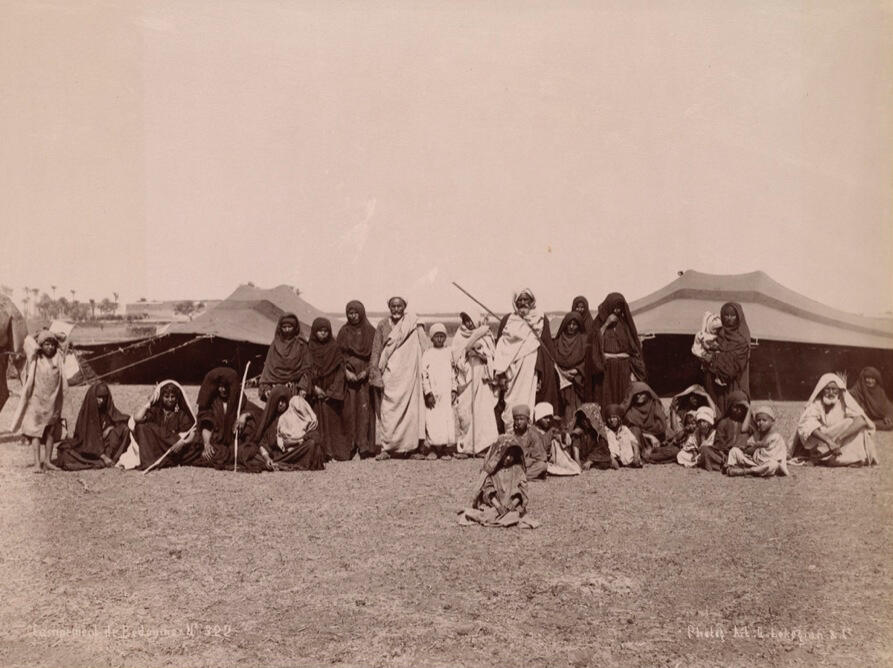
G. Lékégian & Cie., Beduínský tábor v Egyptě, konec 19. století. Boston Public Library.
Libor František Strašek
autor projektu Súdán 1875
[email protected]Uvítám upozornění na prameny, fotografie, archivní materiály nebo dochované předměty vztahující se k Egyptu a Súdánu druhé poloviny 19. století.Projekt je otevřen spolupráci s badateli, muzei, archivy, sběrateli i dalšími zájemci o historickou rekonstrukci.
Prameny
Rekonstrukce projektu Súdán 1875 vychází především z dobových písemných a obrazových pramenů, dochovaných předmětů a muzejních sbírek. Jednotlivé zdroje vzájemně porovnáváme a využíváme je podle toho, jakou část každodenního života, cestování nebo hmotné kultury dokládají.
Georg Schweinfurth
The Heart of Africa: Three Years’ Travels and Adventures in the Unexplored Regions of Central Africa, from 1868 to 1871
London: Sampson Low, Marston, Low, and Searle, 1873. 2 svazky.
Překlad Ellen E. Frewer; s úvodem Winwooda Readea.
Základní pramen projektu. Schweinfurthovy záznamy z cesty přes Chartúm, oblast Bílého Nilu a Bahr el-Ghazal poskytují podrobné informace o cestování, táborech, krajině, místním obyvatelstvu, rostlinách, zvířatech a hmotné kultuře severovýchodní a střední Afriky bezprostředně před obdobím naší rekonstrukce.
. . .
Samuel White Baker
Ismailïa: A Narrative of the Expedition to Central Africa for the Suppression of the Slave Trade, Organized by Ismail, Khedive of Egypt
London: Macmillan and Co., 1874. 2 svazky.
Klíčový pramen pro prostředí Bílého Nilu. Bakerův popis expedice zachycuje cestování, říční dopravu, tábory, zásobování a každodenní podmínky v oblasti mezi Chartúmem a rovníkovou Afrikou na počátku 70. let 19. století.
. . .
Francis Galton
The Art of Travel; or, Shifts and Contrivances Available in Wild Countries
Fifth Edition. London: John Murray, 1872.
Praktická příručka cestovatele. Galtonova příručka poskytuje dobové návody k organizaci expedice, výstroji, táboření, stanům, lůžkům, ohni, zásobování vodou a potravinami, uzlům i improvizovaným opravám a konstrukcím v terénu.
. . .
F. Sidney Ensor
Incidents on a Journey through Nubia to Darfoor
London: W. H. Allen & Co., 1881.
Přímé svědectví z let 1875–1876. Ensorův popis cesty z Núbie do Dárfúru vznikl při průzkumu trasy plánované železnice k El Fašeru. Je cenným pramenem pro podobu cestování, karavan, táboření, zásobování vodou, stanů a každodenního života v egyptském Súdánu bezprostředně v době rekonstruované projektem.
. . .
Ernst Marno
Reisen im Gebiete des blauen und weissen Nil, im egyptischen Sudan und den angrenzenden Negerländern in den Jahren 1869 bis 1873
Wien, 1874
Cestopis rakouského cestovatele Ernsta Marna zachycující jeho cesty v letech 1869–1873 v oblasti Modrého a Bílého Nilu, egyptského Súdánu a přilehlých oblastí. Bohatý dobový pramen k prostředí, obyvatelstvu, cestování a každodennímu životu v Súdánu bezprostředně před rokem 1875.
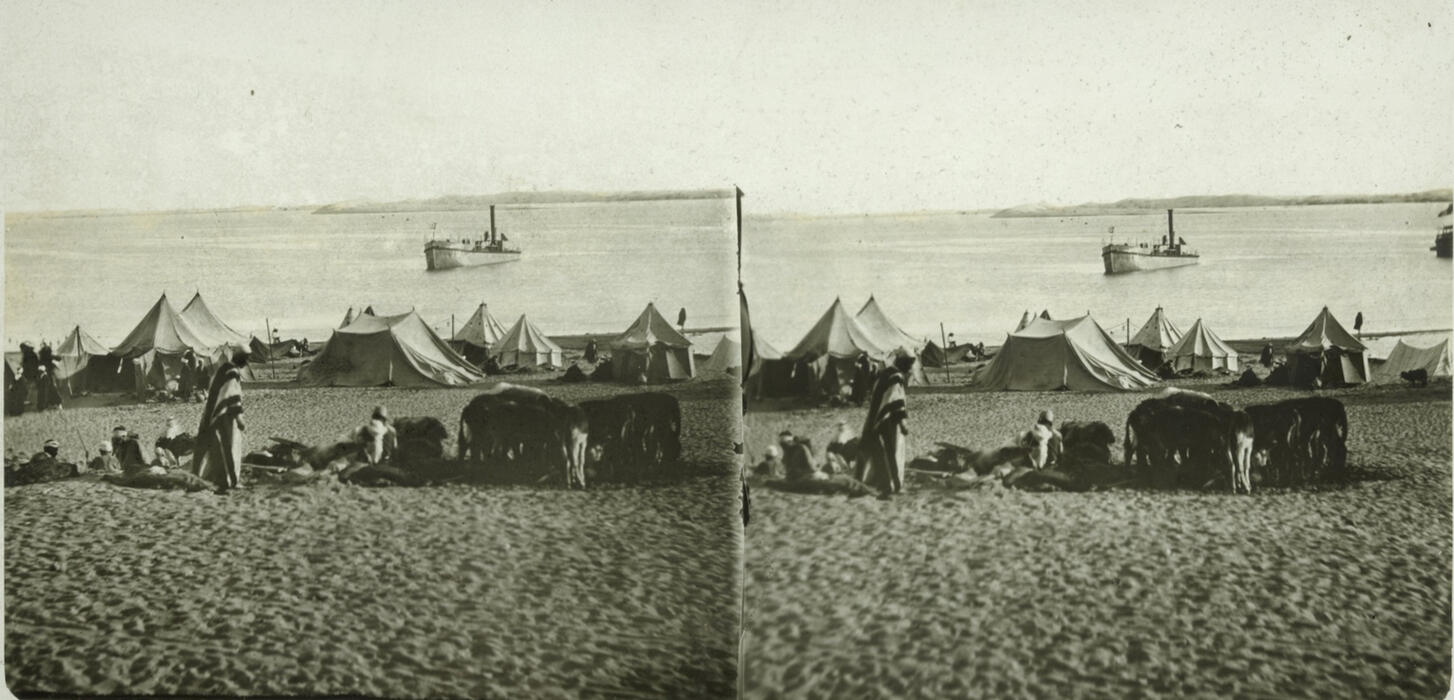
Stanový tábor u jezera Timsah, Ismailia, 1869
Inauguration du canal de Suez. Ismailia: campement arabe au bord du lac Timsah (instantanée).
Ferrier P. F. & Soulier, J. Levy S.
Technisches Museum Wien, SD-01-3795, snímek 10012. CC BY-NC 4.0.
Obrazový pramen pro rekonstrukci tábora. Stereofotografie zachycuje stanový tábor u jezera Timsah během otevření Suezského průplavu roku 1869. Umožňuje studovat typy a konstrukci stanů, jejich rozmístění, vybavení tábora i vztah k okolní krajině.
. . .
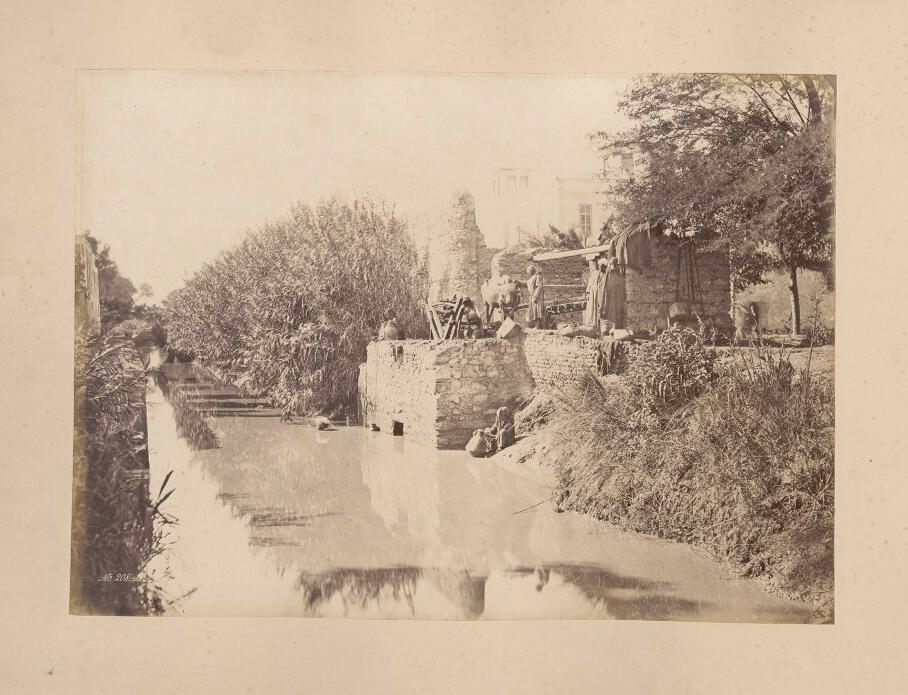
Šadúf – zavlažovací systém, Egypt, kolem 1875
No. 209. Chadouf, système d’arrosage arabe
Émile Béchard
Voyage en Égypte et Nubie
Qatar National Library. No Known Copyright.
Obrazový pramen pro každodenní život a techniku. Fotografie zachycuje tradiční zavlažovací zařízení v jeho skutečném prostředí, včetně vodního kanálu, vegetace, staveb a lidských postav. Umožňuje studovat nejen samotný způsob čerpání a rozvodu vody, ale také jeho začlenění do zemědělské krajiny Egypta 19. století.
. . .
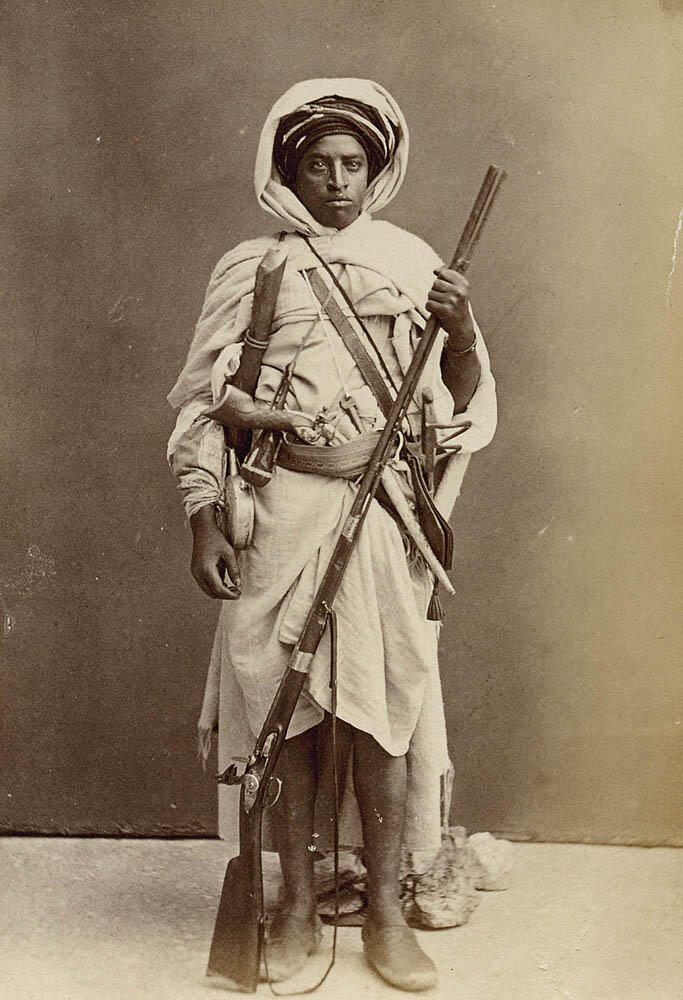
Súdánský bojovník, kolem 1880
Sudanese warrior
Neznámý fotograf. Albuminový tisk, 135 × 95 mm.
Shapero Rare Books, stock code 63326.
© Shapero Rare Books Ltd
Obrazový pramen pro oděv a výzbroj. Fotografie zachycuje súdánského muže s výzbrojí a představuje cenný srovnávací pramen pro studium oděvu, osobní výstroje a způsobu nošení jednotlivých předmětů v závěru 19. století.
Reprodukováno s laskavým svolením Shapero Rare Books Ltd.
. . .
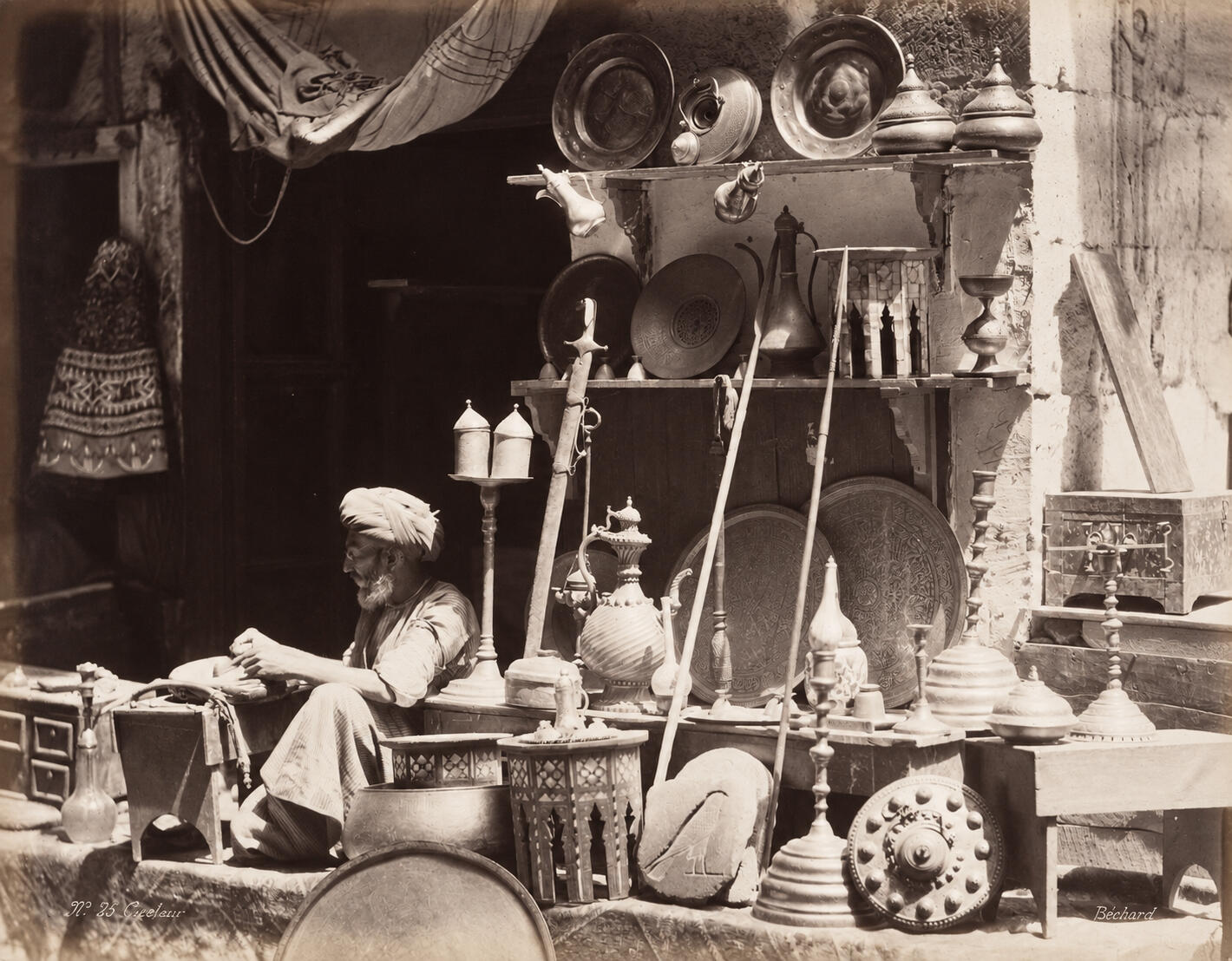
Cizelér, Egypt, 1869
No 25. Ciseleur
Émile Béchard. Albuminový tisk, 21 × 26,8 cm.
Leiden University Libraries, Special Collections, Album MM.522, Pl. 13.
Collection Leiden University Libraries
Obrazový pramen pro řemeslo a hmotnou kulturu. Fotografie zachycuje řemeslníka při práci obklopeného množstvím kovových výrobků a vybavením dílny. Poskytuje mimořádně detailní doklad pracovního prostředí, nástrojů, nádob, svítidel, mobiliáře i oděvu v Egyptě druhé poloviny 19. století.
Dochované předměty a muzejní sbírky představují jeden z hlavních pramenů projektu. Umožňují ověřovat materiály, konstrukční řešení, rozměry a způsoby výroby, které písemné ani obrazové prameny často nezachycují dostatečně podrobně.
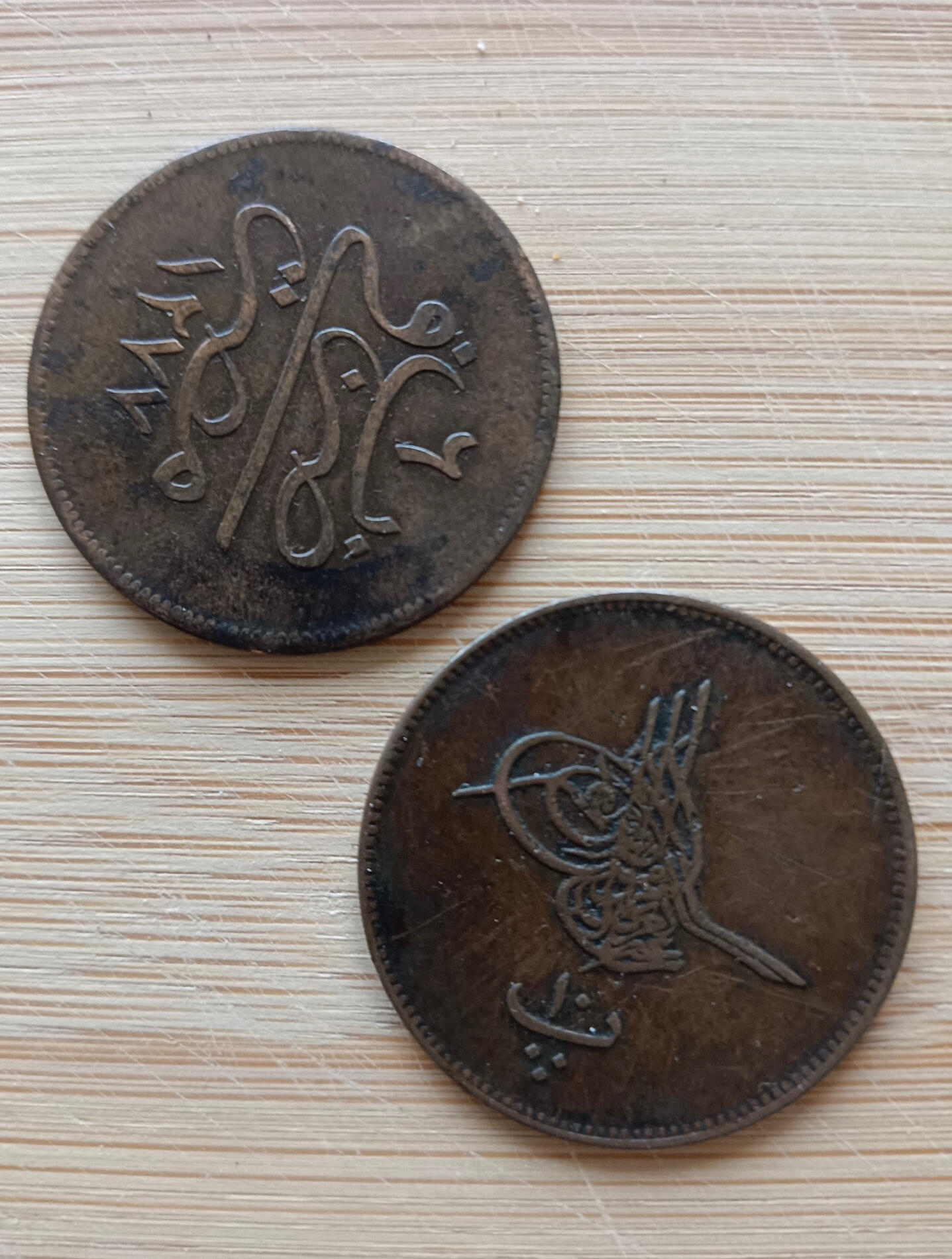
10 para, Egypt, 1864 a 1865
Osmanská říše, období vlády sultána Abdülazize.
Originální předměty ve sbírce projektu Súdán 1875. Dvě oběžné mince představují drobný, ale bezprostřední doklad každodenního života v Egyptě deset let před obdobím rekonstrukce. Vedle datace a ikonografie dokumentují skutečný materiál, rozměry, povrch a stopy používání dobového oběživa.
Ve vlastnictví projektu Súdán 1875.
Seif El Rashidi – Sam Bowker
The Tentmakers of Cairo: Egypt’s Medieval and Modern Appliqué Craft
Cairo/New York: The American University in Cairo Press, 2018.
Základní odborná práce ke stanové textilní tradici. Publikace zasazuje egyptské aplikované textilie khayamiya do historického a řemeslného kontextu a představuje důležitý srovnávací pramen při studiu stanů a stanové výzdoby.
. . .
Yousif H. Madani
Al-Angareb: Traditional Bed Craft Industry in the Sudan
M.A. dissertation, I.A.A.S., University of Khartoum.
Specializovaná studie tradičního súdánského lůžka angareb. Práce se zabývá jeho výrobou a řemeslnou tradicí a představuje důležitý odborný pramen pro plánovanou rekonstrukci lůžka v rámci projektu Súdán 1875.
Pramen identifikován; úplný text práce se projektu dosud nepodařilo získat.
. . .
Mercedes Volait
Antique Dealing and Creative Reuse in Cairo and Damascus 1850–1890: Intercultural Engagements with Architecture and Craft in the Age of Travel and Reform
Leiden/Boston: Brill, 2021.
Odborná studie materiální kultury pozdně osmanské Káhiry a Damašku. Publikace sleduje řemesla, obchod s předměty, jejich sběratelství a nové způsoby využití v letech 1850–1890. Pro projekt představuje důležitý pramen při studiu řemeslníků, předmětů každodenní potřeby a interpretaci dobových fotografií.
. . .
Friedrich Spuhler
Carpets from Islamic Lands
London: Thames & Hudson, 2012.
Srovnávací pramen pro historické koberce a textilní vybavení interiéru. Publikace představuje koberce z různých oblastí islámského světa a umožňuje studovat jejich materiály, konstrukci, ornamentiku a regionální původ. Projekt ji využívá při posuzování textilií vhodných pro rekonstrukci táborového prostředí.
. . .
Nurhan Atasoy
Otağ-ı Hümayun: The Ottoman Imperial Tent Complex
Istanbul: Aygaz, 2000
Zásadní odborná práce k osmanským císařským stanům. Publikace se věnuje konstrukci, výzdobě a funkci osmanských stanových komplexů a představuje důležitý srovnávací pramen pro studium historických stanů, jejich textilních částí a prostorového uspořádání.
Sudan 1875
Camp on the White Nile
A historical reconstruction of life, travel and material culture
in Egypt and Sudan around 1875.
About the Project
Sudan 1875 is a historical reconstruction project focusing on everyday life, travel and material culture in Egypt and Sudan during the 1870s. It draws on contemporary travel accounts, photographs, museum collections, archival sources and surviving objects.The aim is not to create a romanticised image of the Orient, but to reconstruct, step by step, the environment, equipment and conditions experienced by people travelling between Egypt and the interior of Northeast Africa.Each element of the reconstruction is therefore based on specific historical evidence. Where surviving sources disagree, or where a question cannot be answered with reasonable certainty, we aim to acknowledge that uncertainty and to distinguish documented evidence from working reconstruction.
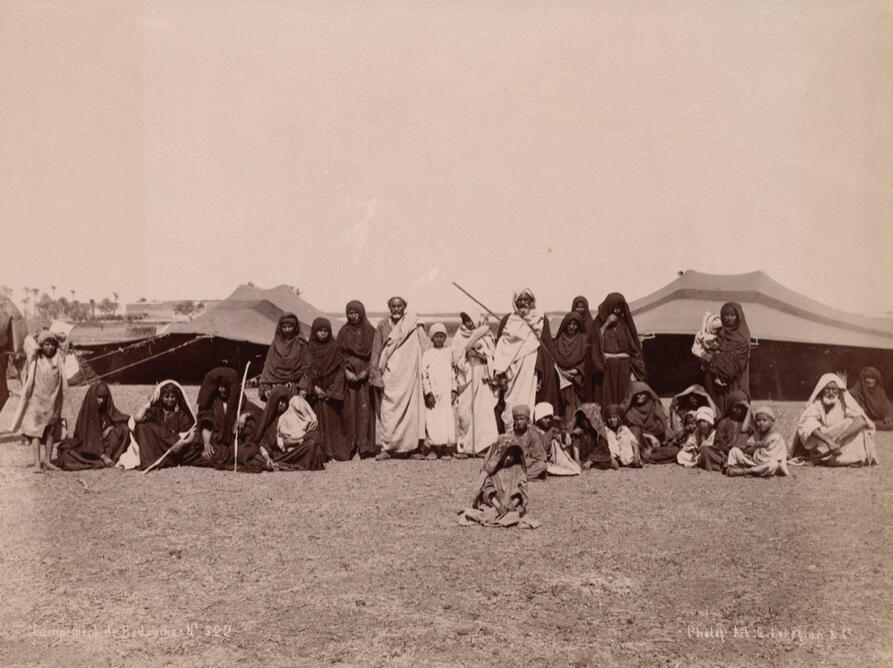
G. Lékégian & Cie., Bedouin camp in Egypt, late 19th century. Boston Public Library.
Sources
The reconstruction undertaken by the Sudan 1875 project is based primarily on contemporary written and visual sources, surviving objects and museum collections. We compare individual sources and use them according to the aspects of everyday life, travel or material culture they document.
Georg Schweinfurth
The Heart of Africa: Three Years’ Travels and Adventures in the Unexplored Regions of Central Africa, from 1868 to 1871
London: Sampson Low, Marston, Low, and Searle, 1873. 2 vols.
Translated by Ellen E. Frewer; with an introduction by Winwood Reade.
A key source for the project. Schweinfurth’s account of his journey through Khartoum, the White Nile region and Bahr el-Ghazal provides detailed information on travel, camps, landscape, local populations, plants, animals and the material culture of Northeast and Central Africa immediately preceding the period of our reconstruction.
. . .
Samuel White Baker
Ismailïa: A Narrative of the Expedition to Central Africa for the Suppression of the Slave Trade, Organized by Ismail, Khedive of Egypt
London: Macmillan and Co., 1874. 2 vols.
A key source for the White Nile region. Baker’s account of the expedition documents travel, river transport, camps, provisioning and everyday conditions in the region between Khartoum and equatorial Africa in the early 1870s.
. . .
Francis Galton
The Art of Travel; or, Shifts and Contrivances Available in Wild Countries
Fifth Edition. London: John Murray, 1872.
A practical traveller’s handbook.Galton’s handbook provides contemporary guidance on organising an expedition, equipment, camping, tents, beds, fire, water and food supplies, knots, as well as improvised repairs and constructions in the field.
. . .
F. Sidney Ensor
Incidents on a Journey through Nubia to Darfoor
London: W. H. Allen & Co., 1881.
A first-hand account from 1875–1876. Ensor’s account of his journey from Nubia to Darfur was written during a survey of the route for a proposed railway to El Fasher. It is a valuable source for travel, caravans, camping, water supplies, tents and everyday life in the Egyptian Sudan during the very period reconstructed by the project.
. . .
Ernst Marno
Reisen im Gebiete des blauen und weissen Nil, im egyptischen Sudan und den angrenzenden Negerländern in den Jahren 1869 bis 1873
Wien, 1874
A travel account by Austrian explorer Ernst Marno, documenting his journeys between 1869 and 1873 in the regions of the Blue and White Nile, the Egyptian Sudan, and neighbouring territories. A rich contemporary source on the environment, people, travel, and everyday life in Sudan immediately preceding the year 1875.
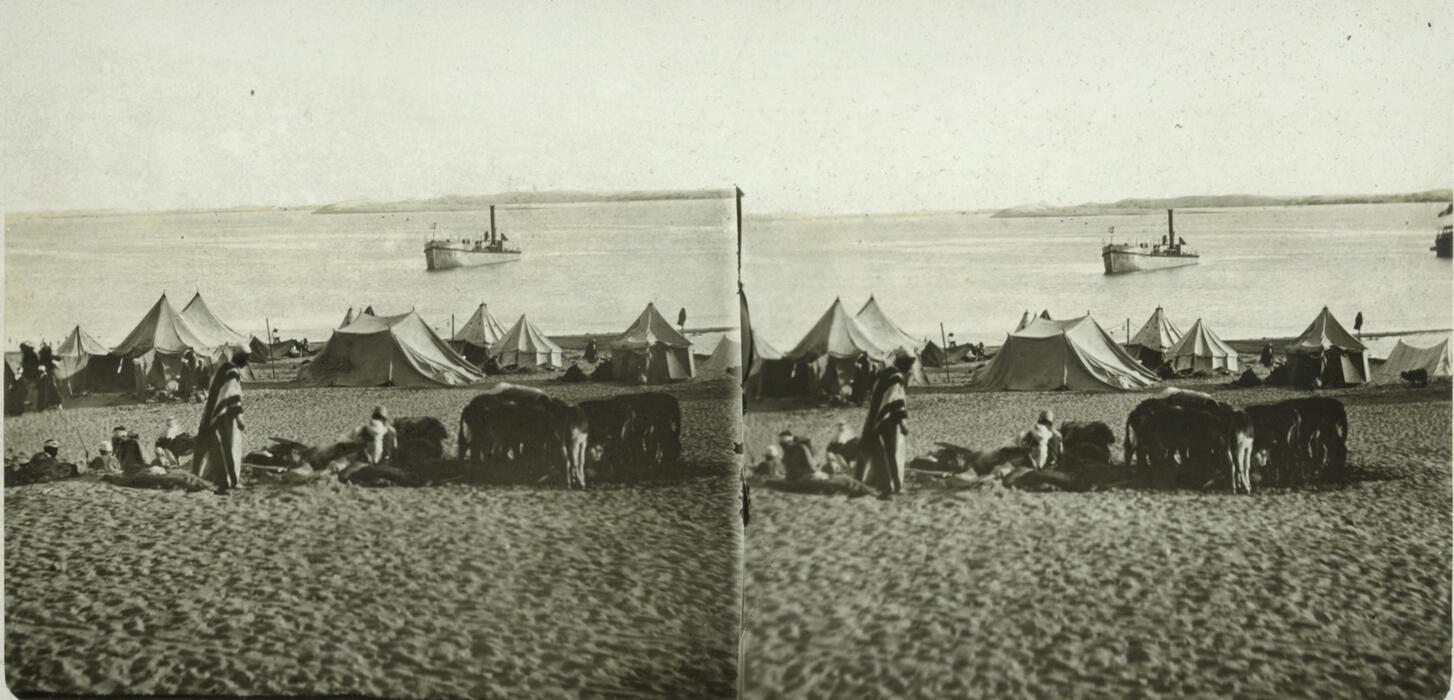
Tent camp on the shore of Lake Timsah, Ismailia,1869
Inauguration du canal de Suez. Ismailia: campement arabe au bord du lac Timsah (instantanée).
Ferrier P. F. & Soulier, J. Levy S.
Technisches Museum Wien, SD-01-3795, snímek 10012. CC BY-NC 4.0.
Visual source for the reconstruction of the camp. The stereograph shows a tent camp on the shore of Lake Timsah during the opening of the Suez Canal in 1869. It allows us to study the types and construction of tents, their arrangement, camp equipment and their relationship to the surrounding landscape.
. . .
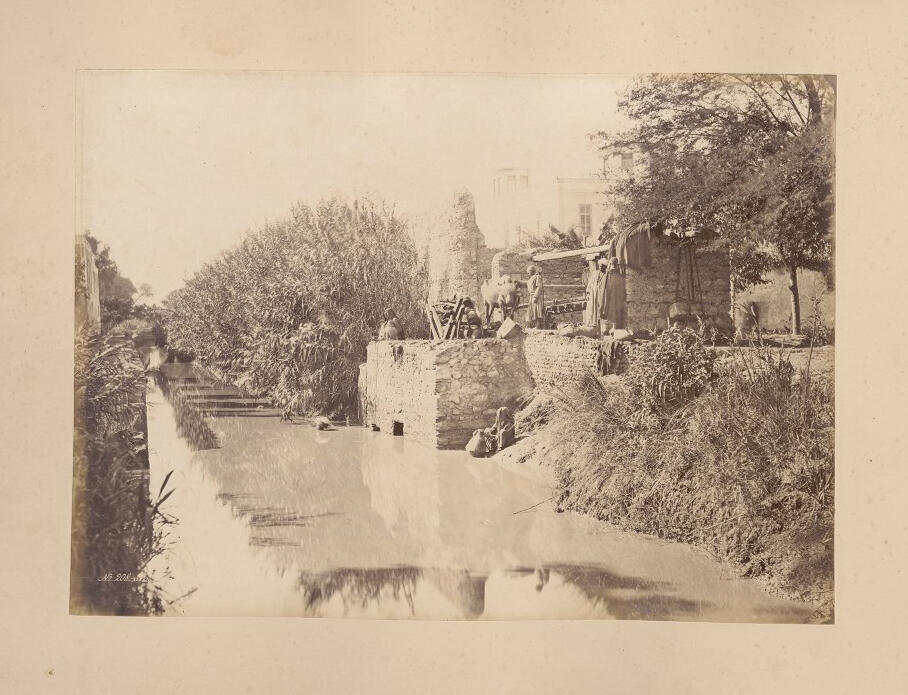
Shaduf – irrigation system, Egypt, c. 1875
No. 209. Chadouf, système d’arrosage arabe
Émile Béchard
Voyage en Égypte et Nubie
Qatar National Library. No Known Copyright.
Visual source for everyday life and technology. The photograph shows a traditional irrigation device in its actual setting, including the water channel, vegetation, buildings and human figures. It allows us to study not only the method of drawing and distributing water, but also its integration into the agricultural landscape of 19th-century Egypt.
. . .
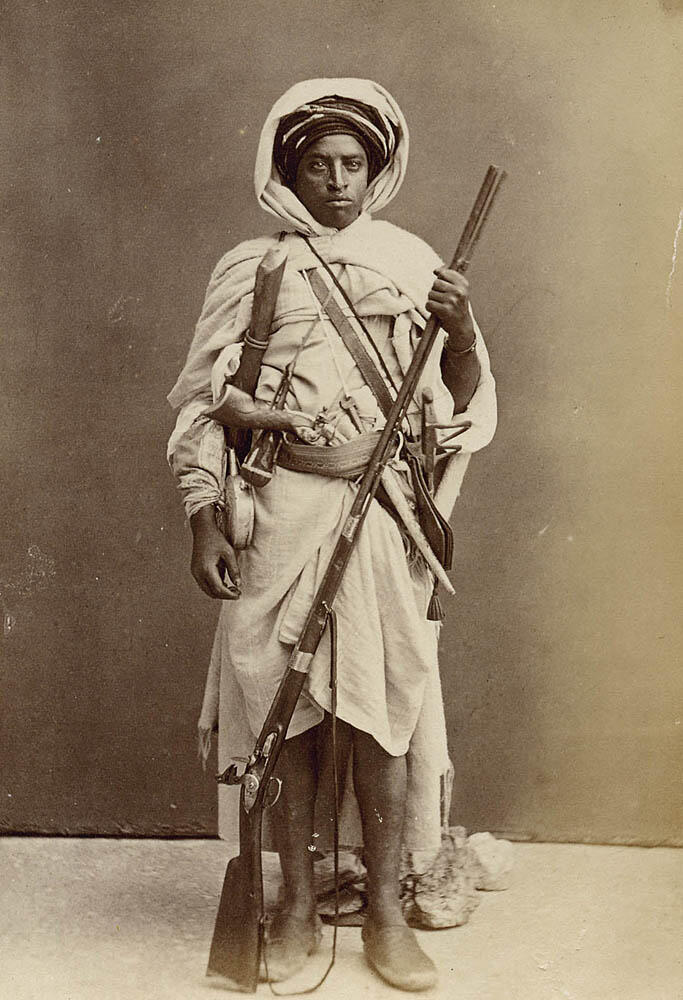
Sudanese Warrior, c. 1880
Sudanese warrior
Unknown photographer. Albumen print, 135 × 95 mm.
Shapero Rare Books, stock code 63326.
© Shapero Rare Books Ltd
Visual source for clothing and weaponry. The photograph depicts a Sudanese man with weapons and provides valuable comparative evidence for the study of clothing, personal equipment and the ways in which individual objects were worn in the late 19th century.
Reproduced by kind permission of Shapero Rare Books Ltd.
. . .
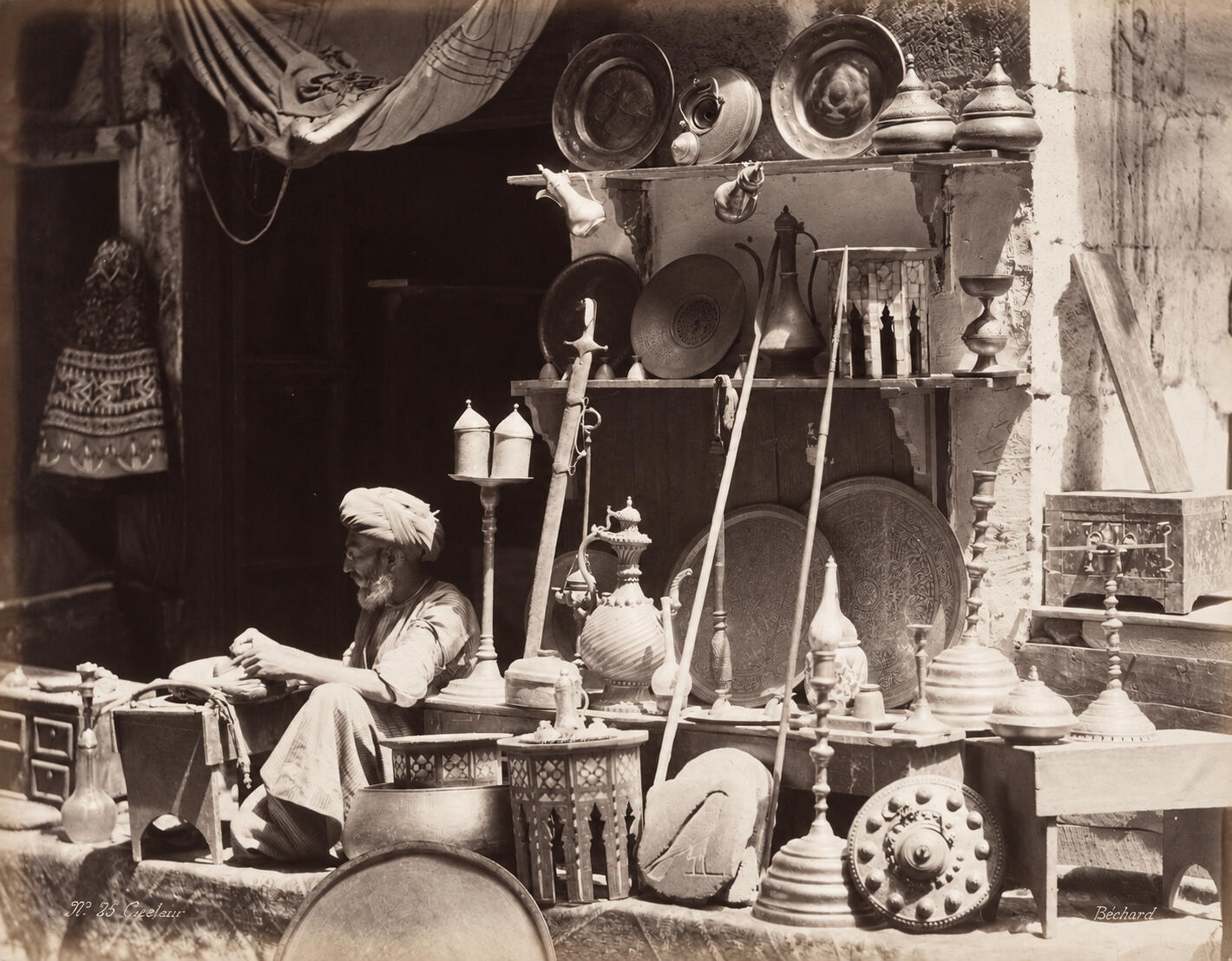
Chiseller, Egypt, 1869
No. 25. Ciseleur
Émile Béchard. Albumen print, 21 × 26.8 cm.
Leiden University Libraries, Special Collections, Album MM.522, Pl. 13.
Collection Leiden University Libraries
Visual source for craftsmanship and material culture. The photograph shows a craftsman at work surrounded by numerous metal objects and workshop furnishings. It provides exceptionally detailed evidence of the working environment, tools, vessels, lighting equipment, furniture and clothing in Egypt in the second half of the 19th century.
Surviving objects and museum collections constitute one of the project’s principal sources. They allow us to verify materials, construction methods, dimensions and manufacturing techniques that written and visual sources often do not document in sufficient detail.
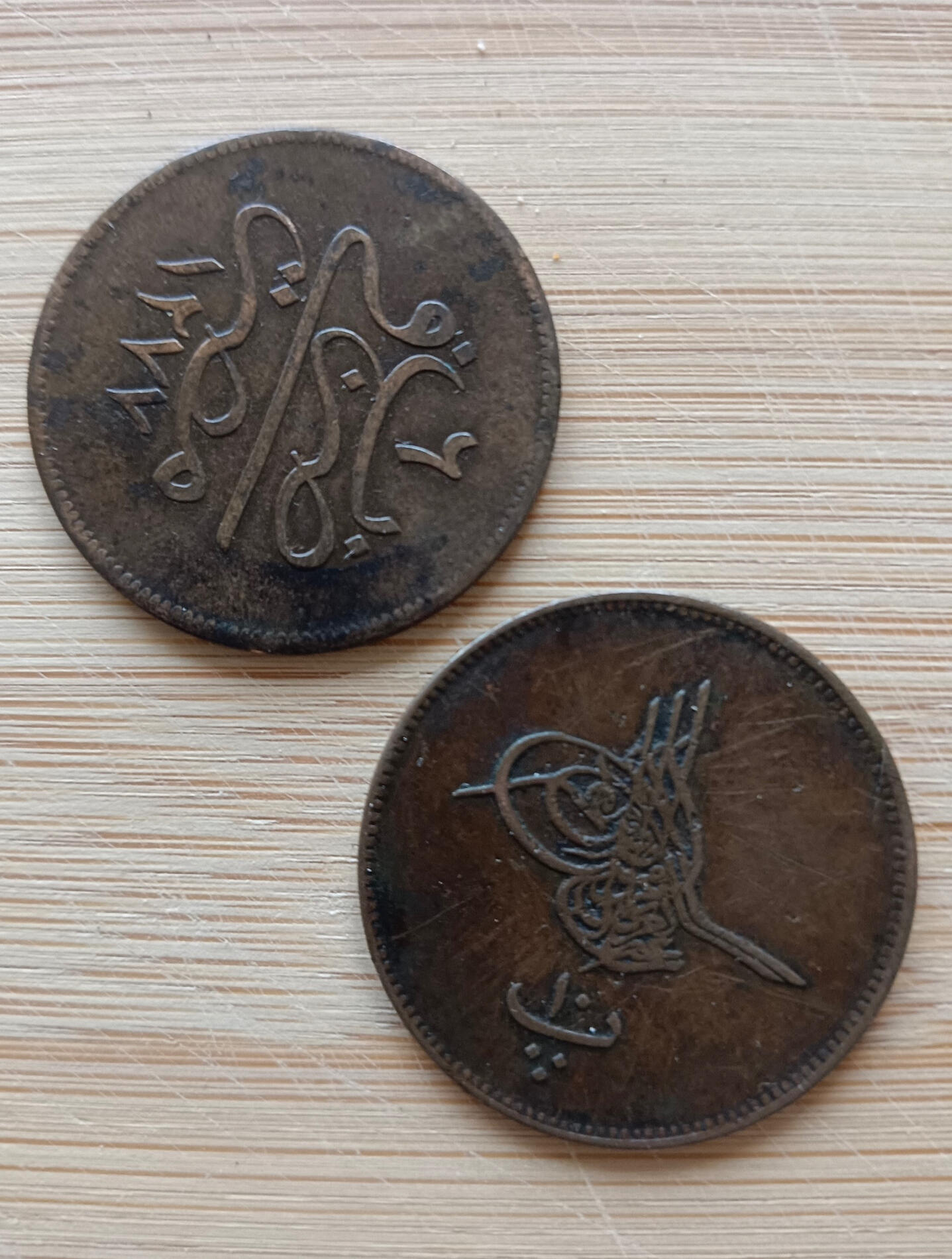
10 para, Egypt, 1864 a 1865
Ottoman Empire, during the reign of Sultan Abdülaziz.
Original objects in the Sudan 1875 project collection. The two coins are modest but direct evidence of everyday life in Egypt ten years before the period of the reconstruction. In addition to their dating and iconography, they document the actual material, dimensions, surface and traces of use of contemporary coinage.
Property of the Sudan 1875 project.
Scholarly literature complements period sources with the findings of modern research. It is used primarily to verify interpretations, identify materials and manufacturing techniques, and place individual objects within a broader historical and cultural context.
Seif El Rashidi – Sam Bowker
The Tentmakers of Cairo: Egypt’s Medieval and Modern Appliqué Craft
Cairo/New York: The American University in Cairo Press, 2018.
A key scholarly work on the tent textile tradition. The publication places Egyptian khayamiya appliqué textiles within their historical and craft context and provides an important comparative source for the study of tents and tent decoration.
. . .
Yousif H. Madani
Al-Angareb: Traditional Bed Craft Industry in the Sudan
M.A. dissertation, I.A.A.S., University of Khartoum.
A specialised study of the traditional Sudanese angareb bed. The study examines its manufacture and craft tradition and provides an important scholarly source for the planned reconstruction of an angareb within the Sudan 1875 project.
Source identified; the full text of the study has not yet been obtained by the project.
. . .
Mercedes Volait
Antique Dealing and Creative Reuse in Cairo and Damascus 1850–1890: Intercultural Engagements with Architecture and Craft in the Age of Travel and Reform
Leiden/Boston: Brill, 2021.
A scholarly study of the material culture of late Ottoman Cairo and Damascus. The publication examines crafts, the trade and collecting of objects, and their creative reuse between 1850 and 1890. For the project, it provides an important source for the study of craftspeople, objects of everyday use and the interpretation of period photographs.
. . .
Friedrich Spuhler
Carpets from Islamic Lands
London: Thames & Hudson, 2012.
A comparative source for historical carpets and interior textiles. The publication presents carpets from various regions of the Islamic world and enables the study of their materials, construction, ornamentation and regional origins. The project uses it to assess textiles suitable for the reconstruction of the camp environment.
. . .
Nurhan Atasoy
Otağ-ı Hümayun: The Ottoman Imperial Tent Complex
Istanbul: Aygaz, 2000
A key scholarly work on Ottoman imperial tents. The publication examines the construction, decoration and function of Ottoman tent complexes and provides an important comparative source for the study of historical tents, their textile components and spatial organisation.
Libor František Strašek
author of the Sudan 1875 project
[email protected]I welcome information about sources, photographs, archival materials or surviving objects relating to Egypt and Sudan in the second half of the 19th century.The project is open to collaboration with researchers, museums, archives, collectors and others interested in historical reconstruction.
This section is currently being prepared.
This section is currently being prepared.
Výběr muzeí, knihoven, digitálních sbírek a dalších zdrojů, které využíváme při výzkumu projektu Súdán 1875.
A selection of museums, libraries, digital collections and other resources that we use in our research for the Sudan 1875 project.